In the United States, tree care is far more than pruning branches. Urban forests cover 141 million acres, and urban forestry departments contribute an estimated $35 billion to the U.S. economy each year. More than 500,000 people work in related fields, and the tree care industry generates roughly $26 billion in annual revenue—a figure that continues to grow.
But this work is not ordinary landscaping. According to the Bureau of Labor Statistics, tree care workers face a fatality rate 10 to 30 times the national average. Each year, about 61 tree workers die on the job, and roughly 1,100 are injured. Tree trimming, deadwood removal, and vegetation management near power lines are all high-risk tasks. That is why the U.S. has developed one of the world’s most stringent safety standards for tree care: ANSI Z133, which covers pruning, maintenance, felling, and equipment use.
For rental companies and contractors, this creates a clear demand: equipment that can access tight spaces, work safely on slopes and lawns, and operate near power lines without putting workers at unnecessary risk.
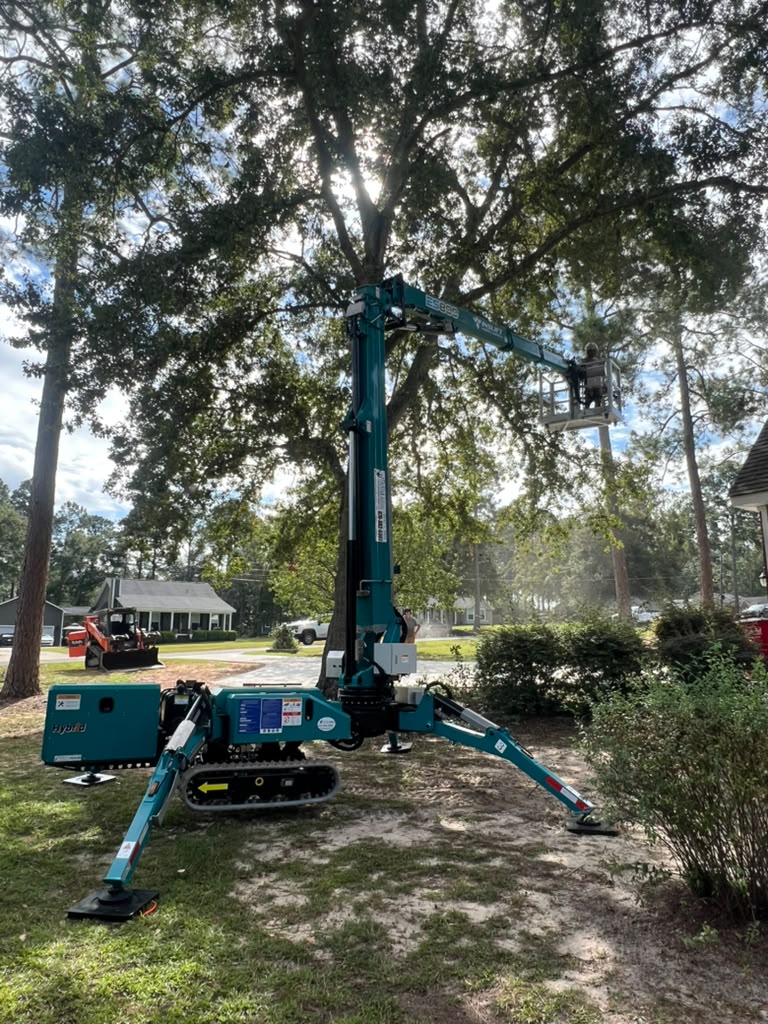
Traditional tree care often relies on climbing ropes or large truck-mounted aerial lifts. Climbing exposes workers to fall and electrical hazards. Large truck-mounted units cannot reach many residential backyards, narrow lanes, or sensitive landscapes. Spider lifts—compact, tracked aerial platforms—address these gaps. Their compact tracks allow them to pass through narrow gates and doorways. Their outrigger systems provide stability on uneven ground, slopes, and lawns. And their platforms let arborists work safely at height instead of hanging from ropes.
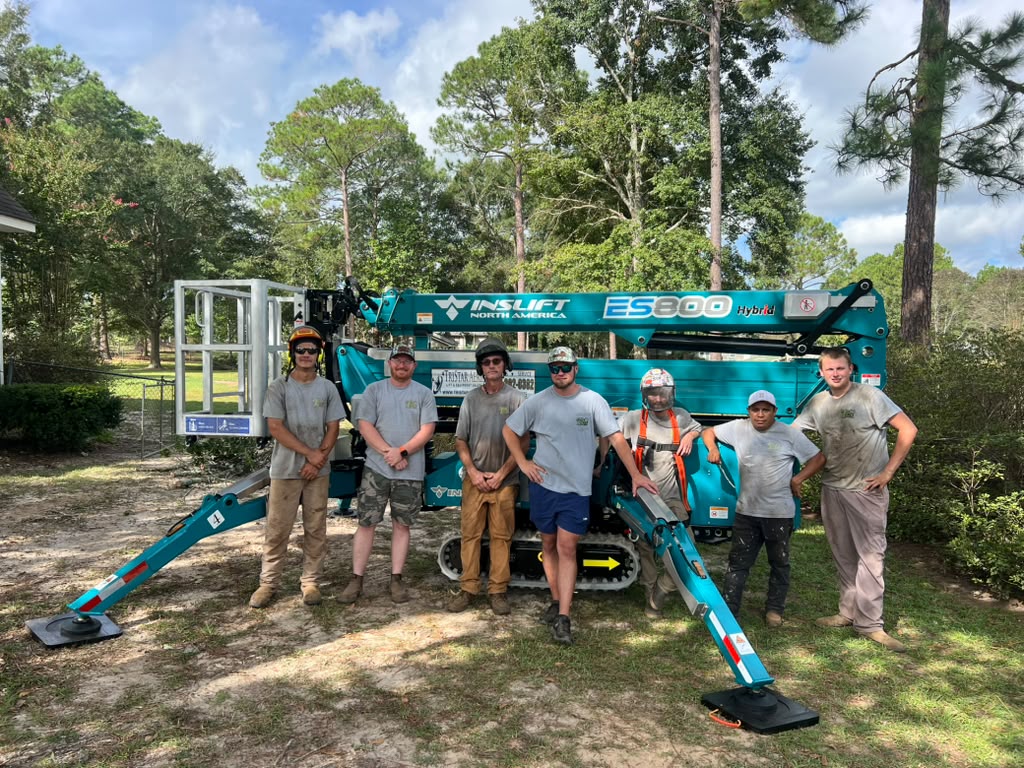
INSLIFT offers a series of spider lifts designed for the U.S. tree care market. These machines are commonly classified on professional equipment platforms as “Spider / Arborist / Atrium Lifts.” Key features include:
360° continuous turret rotation – allows full-range positioning without returning to a starting point.
Maximum working height of 30 meters and horizontal outreach of 15 meters – covers demanding tree pruning and removal tasks.
Spider-style outrigger system – stabilizes the machine on slopes, uneven ground, and sensitive surfaces such as lawns.
Electric power, zero emissions – suitable for residential areas, parks, and other environmentally sensitive sites.
Kubota diesel + Lithium battery – provides both outdoor performance and indoor-friendly operation, covering a full range of job sites.
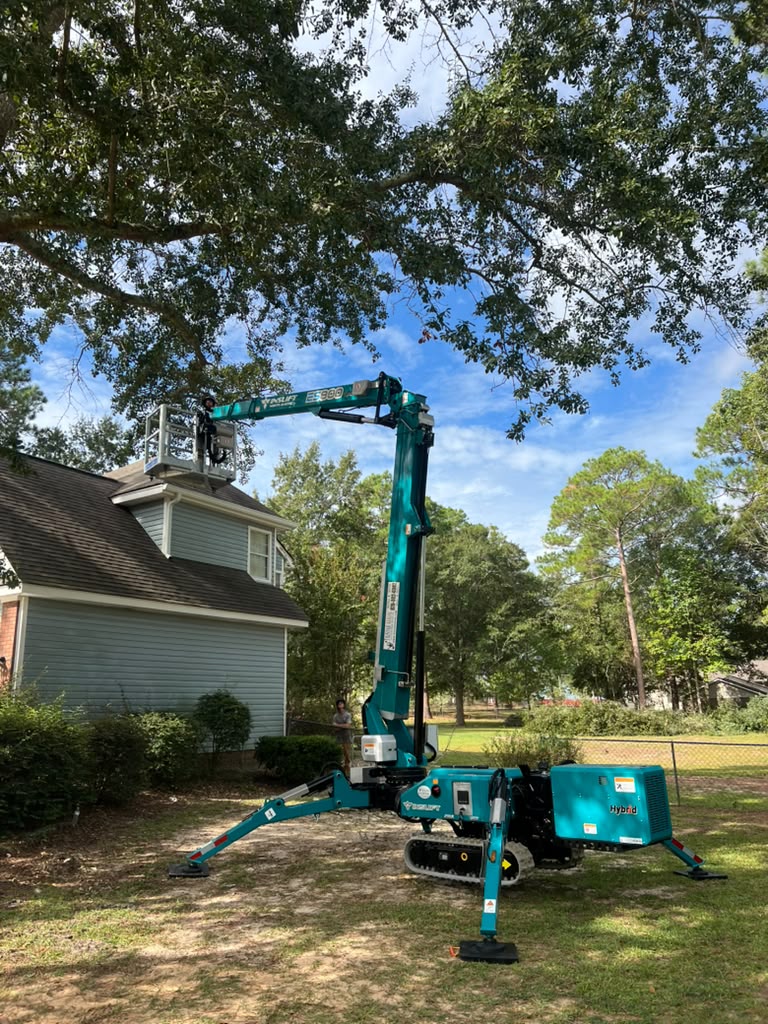
For aerial lift rental companies, the tree care market represents a growing opportunity. A spider lift can serve not only arborists but also municipal, construction, venue, and property maintenance customers—helping improve fleet utilization and customer reach. For end users, a spider lift that fits through narrow access, protects turf, and offers dual-power flexibility can reduce reliance on larger equipment and improve job site efficiency.
In the U.S., tree care is not just “trimming branches.” It is a profession tied to worker safety, urban ecology, and public infrastructure. Good equipment is one of the most important protections for the people doing the work.
To learn more about INSLIFT's ANSI-focused spider lift series, visit www.inslift.com or email to info@inslift.com.